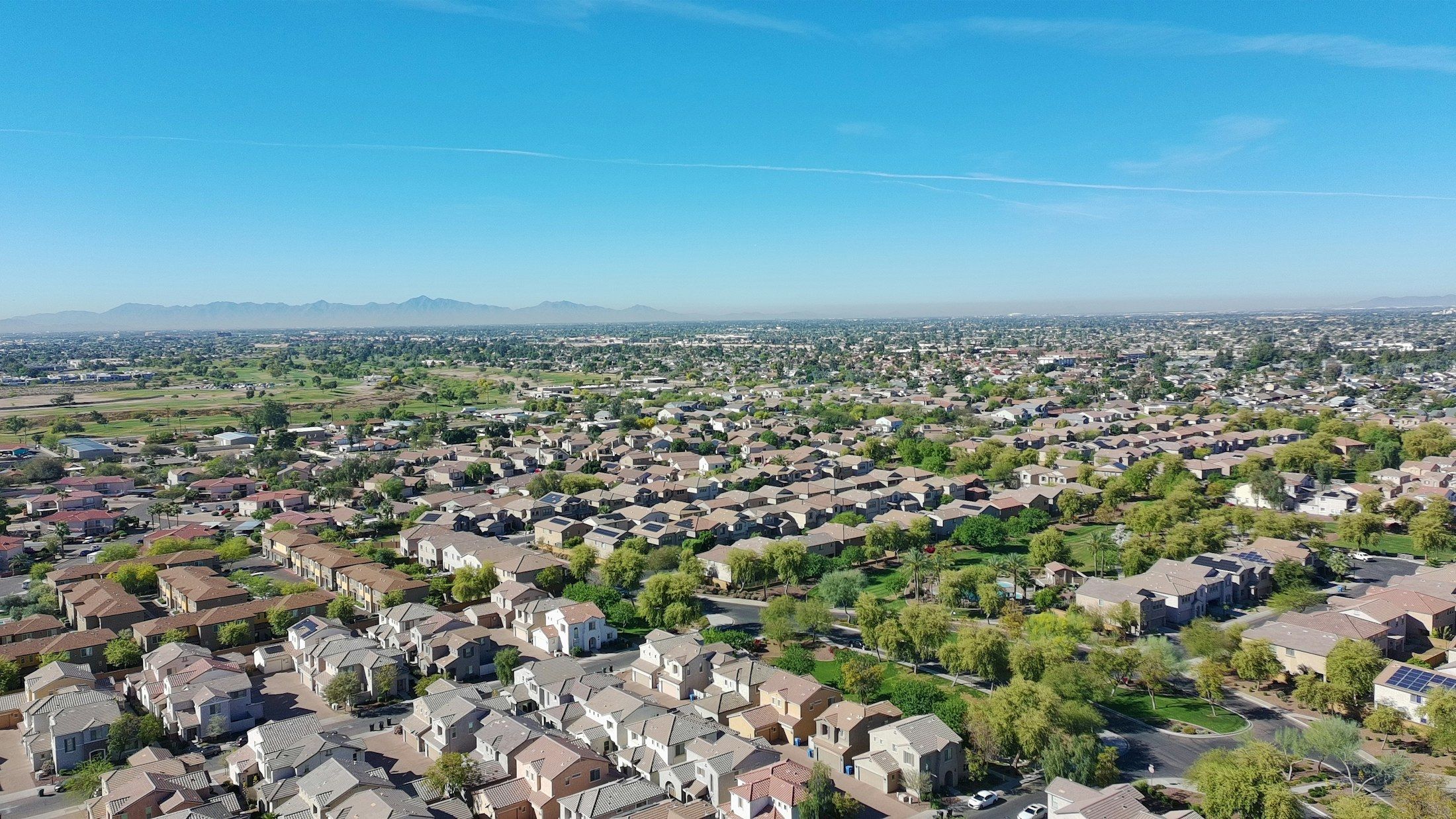
A city built in one decade
Surprise had about 31,000 residents in 2000 and about 118,000 in 2010. U.S. Census Bureau survey data (American Community Survey, 2020–2024) shows what that growth left behind: 53% of Surprise homes were built between 2000 and 2009, and the median home dates to 2005. Fewer than 3% predate 1980. About 86% of homes are detached single-family houses, and about 79% are owner-occupied.
A few areas break the pattern. In east Surprise’s ZIP code 85378, the median home dates to 1996 and about a quarter of homes are manufactured homes. Sun City Grand, an active-adult community finished in 2005, is also inside city limits.
What wears out around year 20
A home from the boom is now roughly 17 to 26 years old. ENERGY STAR puts the typical life of a storage water heater at about 13 years and suggests thinking about replacement once a tank passes 10. If yours is the original, it has outlasted that by years.
The same goes for the parts nobody looks at: braided supply lines under sinks and toilets, washing machine hoses, the refrigerator’s ice-maker line and the AC condensate drain. ENERGY STAR warns that a plugged condensate drain can cause water damage inside the house. When any of these lets go while you’re at work, water can soak drywall, baseboards and carpet pad for hours. See water heater and appliance leaks and the guide to a water heater leaking from the bottom.
Low-hardness water, same old leaks
All of the water the City of Surprise provides is groundwater from 19 city wells. The city’s 2025 water quality reports put average hardness at about 3.9 grains per gallon in the Mountain Vista system, the largest, and about 6.2 in the Desert Oasis system, where samples ranged from 2.6 to 11.1. The City of Phoenix, by comparison, reports 10 to 17.6 grains per gallon.
Less scale is easier on pipes and fixtures, but it doesn’t stop a water heater or a supply line from failing. Tanks still rust through, and hoses and fittings still wear. A report prepared for the U.S. Department of Energy warns that softer water raises corrosion risk in tank water heaters, and suggests inspecting the anode rod every one to two years in soft-water conditions.
Check your provider before you rely on those numbers. Not every Surprise address gets city water, and the city’s drinking water quality page has a lookup to find yours.
The city’s leak alerts
City of Surprise water customers can sign up for a city program that shows water use hour by hour and sends leak or high-usage alerts. An alert when nobody is home, or overnight, is worth checking right away.
The city’s other leak tips:
- Read the meter, use no water for two hours, and read it again. Any change points to a leak.
- For a family of four, winter use above 12,000 gallons a month likely means a serious leak.
- Replace toilet flappers every three to five years.
If the meter moves and no fixture is dripping, the leak may be in a line under the slab. See slab leak water damage.
McMicken Dam and storm runoff
The U.S. Army Corps of Engineers finished McMicken Dam in 1956 to protect Luke Air Force Base, a naval air facility and farmland from flooding. Today the nine-mile earthen dam also protects significant portions of Surprise, El Mirage and Sun City. Its impoundment area sits just northwest of Loop 303. In 2024, the city reported that the Flood Control District of Maricopa County had finished the first of five rehabilitation phases meant to extend the dam’s service life by 100 years.
The dam doesn’t keep local rain out of streets and yards. On September 8, 2014, the National Weather Service photographed flooding in Surprise near 163rd Avenue and Asante Boulevard. The city stocks sandbag sites for residents in flood-prone areas only when heavy rain is forecast, so watch city news before a storm and bring a shovel. During storms, it also advises turning off unneeded power equipment to avoid damage from surges or outages. See monsoon and storm water damage.
If you find a leak today
- Close the valve at the fixture or the main shut-off.
- Stay out of water that has reached outlets or cords.
- Take photos before you move anything.
- Call to reach an independent restoration provider that serves Surprise, and a plumber for the repair.
Once the water is gone, walls and floors still need to dry. See structural drying and the first-hour guide.