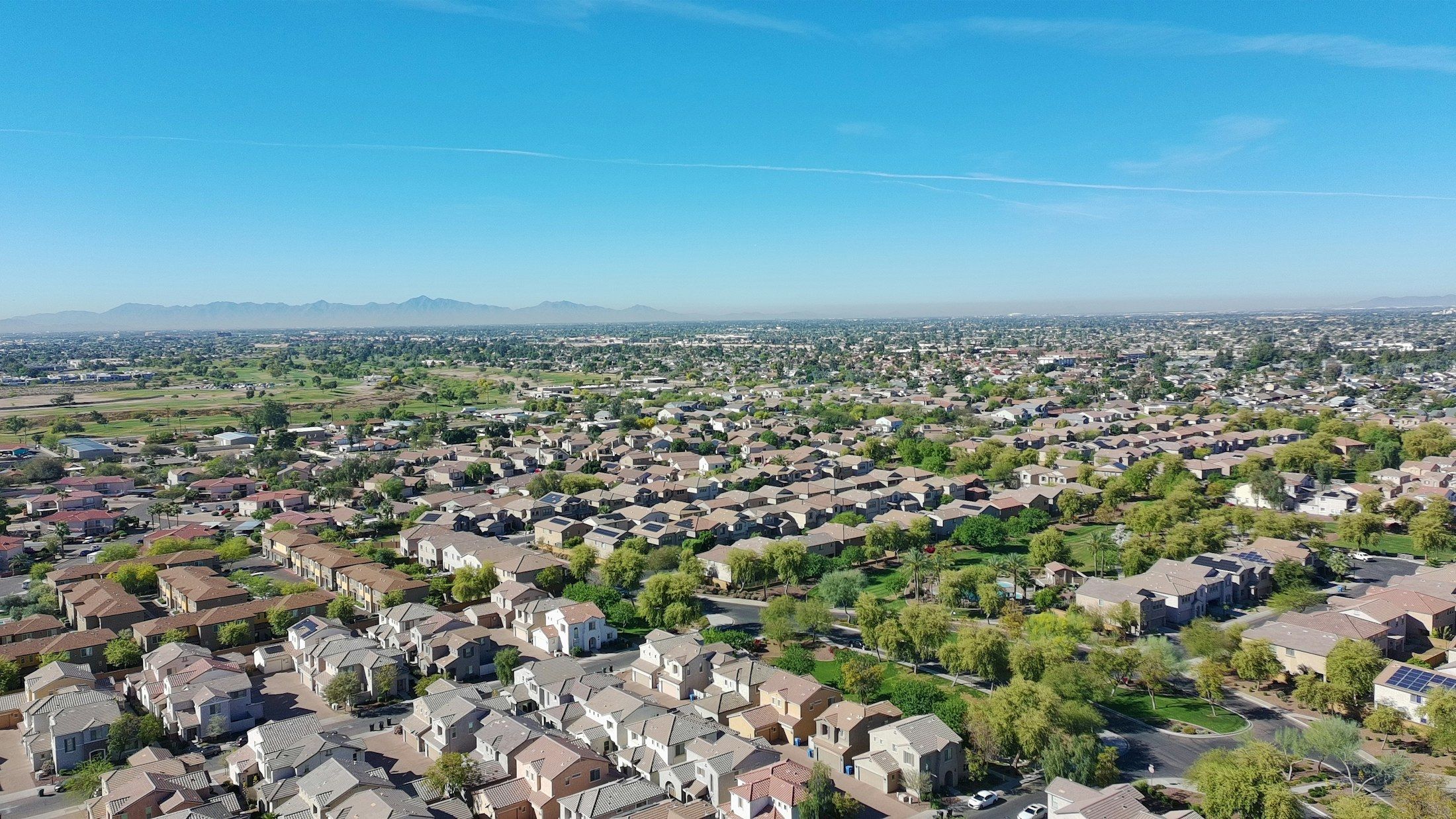
Built in the 2000s boom
El Mirage is a small city, about 10 square miles of land. U.S. Census Bureau survey data (American Community Survey, 2020–2024) puts the median El Mirage home at 2004. Nearly two-thirds of homes were built between 2000 and 2009, and about 73% date from 2000 or later. About 11% predate 1980.
A house from the mid-2000s is now about 20 years old. That’s past the roughly 13-year life ENERGY STAR gives a typical tank water heater, so a home with its original tank is due for a look. Supply lines under sinks and toilets, washer hoses and the valves behind them wear out too. See water heater and appliance leaks and burst pipe water damage.
About 30% of occupied El Mirage homes are rented. If you rent, tell your landlord or property manager about a leak right away.
Manufactured homes
About 7.6% of El Mirage’s housing, roughly 900 homes, is mobile or manufactured, according to the same Census data. That’s a larger share than in Buckeye, Sun City or Sun City West.
In a manufactured home, supply and drain lines usually run beneath the floor. A slow leak there can soak the subfloor and the underside of the home well before anything shows inside. Watch for:
- A soft or spongy floor, often near a bathroom, kitchen or laundry area.
- A musty smell you can’t trace to anything in the room.
- A water bill that climbs while your use stays the same.
Much of the wet material may be out of sight under the floor. EPA guidance on water-damaged materials says wet insulation should be discarded and replaced, and that the subfloor under wet flooring must also be cleaned and dried. When you call, say it’s a manufactured home so the provider knows what to plan for. See structural drying.
Living beside the Agua Fria River
El Mirage sits along the Agua Fria River. The USGS gauge “Agua Fria River at El Mirage” kept annual peak records from 1963 to 1998, and many of those years had zero flow. The river can still run hard. The gauge’s largest peak was 58,400 cubic feet per second on December 19, 1978, followed by 41,800 on February 20, 1980.
The Flood Control District of Maricopa County manages floodplains for El Mirage, not the city. Its project list includes Agua Fria River channelization and levees, the El Mirage Drain, the Dysart Drain and the Lower El Mirage Wash Basin.
The District says every property in Maricopa County has some risk of flooding, even outside mapped floodplains, and that one in four flood insurance claims nationally come from properties outside them. It also says flood damage isn’t covered by homeowners policies. Its storm prep page lists warning signs for a lot and links to a floodplain viewer. For monsoon damage, see monsoon and storm water damage.
El Mirage’s water
The City of El Mirage is the water supplier. Its 2014 report listed hardness of 4 to 9 grains per gallon; check the current report, which the city posts on its Drinking Water Quality page. Hard water leaves scale in pipes and water heaters, so draining sediment on the schedule in your water heater’s manual is worth doing.
After a flood or a big leak
The Flood Control District’s recovery advice fits most water damage, not just floods:
- Tell your insurer.
- Turn off water and electricity, but never while standing in water.
- Photograph the damage before repairs.
- Open doors and windows once it’s safe.
If you rebuild after a flood, the District suggests considering raising the AC unit or water heater. Wet drywall, flooring and cabinets can grow mold if they stay damp, and the EPA advises drying water-damaged areas in 24 to 48 hours. The guide to signs of hidden mold covers what to look for later.
What to do first
- Close the valve at the fixture, or the main water shut-off.
- Stay out of standing water near outlets, cords or appliances.
- Take photos and video before you move anything.
- Call to reach an independent restoration provider that serves El Mirage, plus a plumber if a line or fixture needs repair.
The first-hour guide walks through each step.