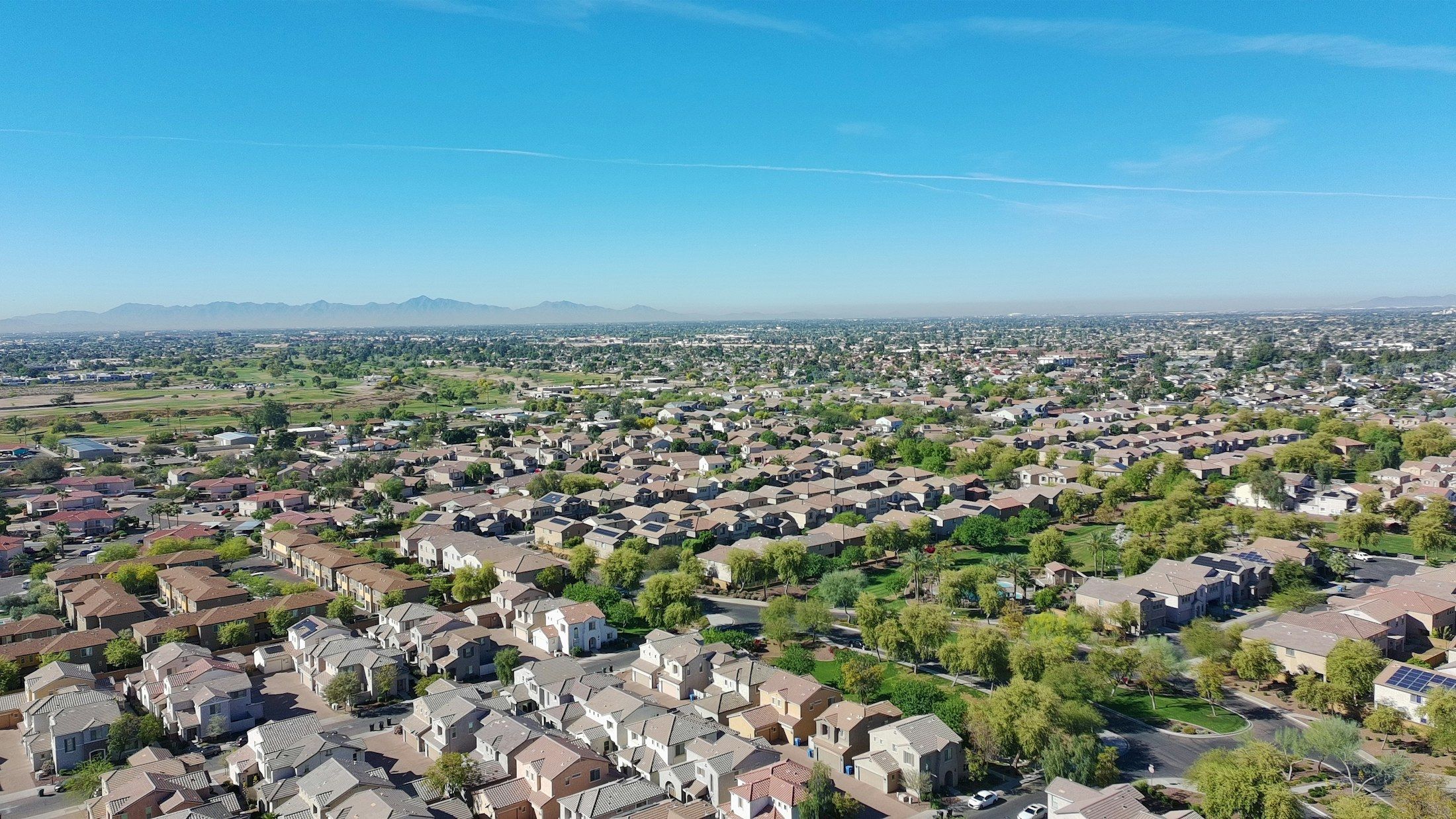
Mesa homes and what they mean for water damage
Mesa grew fast in the 1970s and 1980s, and its housing shows it. U.S. Census Bureau survey data (American Community Survey, 2020–2024) puts the median Mesa home at 1989, with more homes built in the 1980s than in any other decade. About 29% of homes were built before 1980, and about 30% were built in 2000 or later.
Where you live in Mesa changes the picture:
- West and central Mesa. In ZIP codes 85201 through 85204, the median home was built around 1979 to 1981, and roughly half the homes predate 1980. Houses this age have likely been through more than one water heater, and older shut-off valves and supply lines are worth checking before they fail.
- Far southeast Mesa. In ZIP code 85212, the median home was built in 2011. Newer doesn’t mean leak-proof. Water heaters, washing machine hoses, refrigerator lines and AC condensate drains fail in new houses too.
If your home was built before 1978, keep one more thing in mind. The EPA notes that homes built before 1978 are more likely to have lead-based paint, and that cutting and demolition in those homes can create lead dust. Removing wet drywall is exactly that kind of work, so ask the provider how they handle it.
Manufactured homes
About 12.5% of Mesa’s housing units are mobile or manufactured homes, according to the same Census data. That’s a much larger share than in Gilbert, Chandler, Tempe or Scottsdale. They’re concentrated in east Mesa. In ZIP code 85208, more than a third of all homes are manufactured.
Water damage in a manufactured home often starts where you can’t see it. Supply and drain lines usually run under the floor, so a slow leak can soak the underside of the home and the subfloor before anything shows inside. Soft spots in the floor, a musty smell or a water bill that creeps up are worth checking out. When you call, mention that it’s a manufactured home. If you live in a managed community, the office may also have rules about contractors and water shut-offs.
Hard water in Mesa
Mesa gets its water from several sources, and hardness depends on your zone. The city’s 2025 water quality report gives an average of about 12 grains per gallon in the City Zone and about 16 in the Eastern and Southern zones, and it recommends setting water softeners at 16.
Hard water leaves mineral scale in pipes, fixtures and water heaters. ENERGY STAR lists leaks at joints and seams, rust in the water and rumbling from sediment as signs that a water heater is near the end of its life. A tank that lets go in a garage or closet can soak drywall, baseboards and flooring in minutes. See water heater and appliance leaks.
Storms, runoff and flood irrigation
Monsoon storms can drop a lot of rain on Mesa in a short time. On September 8, 2014, Mesa recorded 4.41 inches of rain. The Associated Press reported that floodwaters threatened up to 100 homes after retention basins and channels along the U.S. 60 reached capacity and water flowed into neighborhoods.
A few Mesa-specific things to know:
- Storm drains are separate from the sewer. Mesa’s storm drains carry rainwater off the streets to washes, retention basins and parks. Keeping the drain near your home clear of debris helps.
- Sandbags go at the doors. The city advises placing sandbags in and around outside doors and thresholds, and moving valuables to higher ground.
- Flood irrigation in central Mesa. The city delivers irrigation water to about 300 customers between Mesa Drive and Country Club Drive, and 8th Street and 8th Avenue. If your yard is flood-irrigated, keep the berms in good shape and watch for water pooling against the house.
For roof leaks and water that came in during a storm, see monsoon and storm water damage.
Finding a hidden leak
The City of Mesa suggests a simple check: with all water turned off, watch your water meter. If it keeps registering flow, you may have a leak. Common sources the city lists are toilets, irrigation systems, water softeners, hose bibs and pool autofills. If none of those explain it, the leak may be in a line under the slab or under the floor. See slab leak water damage.
What to do first
- Stop the water at the fixture, or at your home’s main shut-off valve.
- Stay out of standing water if outlets or cords are wet.
- Take photos and video before you move anything.
- Call to reach an independent restoration provider that serves Mesa, and a plumber if a pipe or fixture needs repair.
The first-hour guide covers each step in detail.