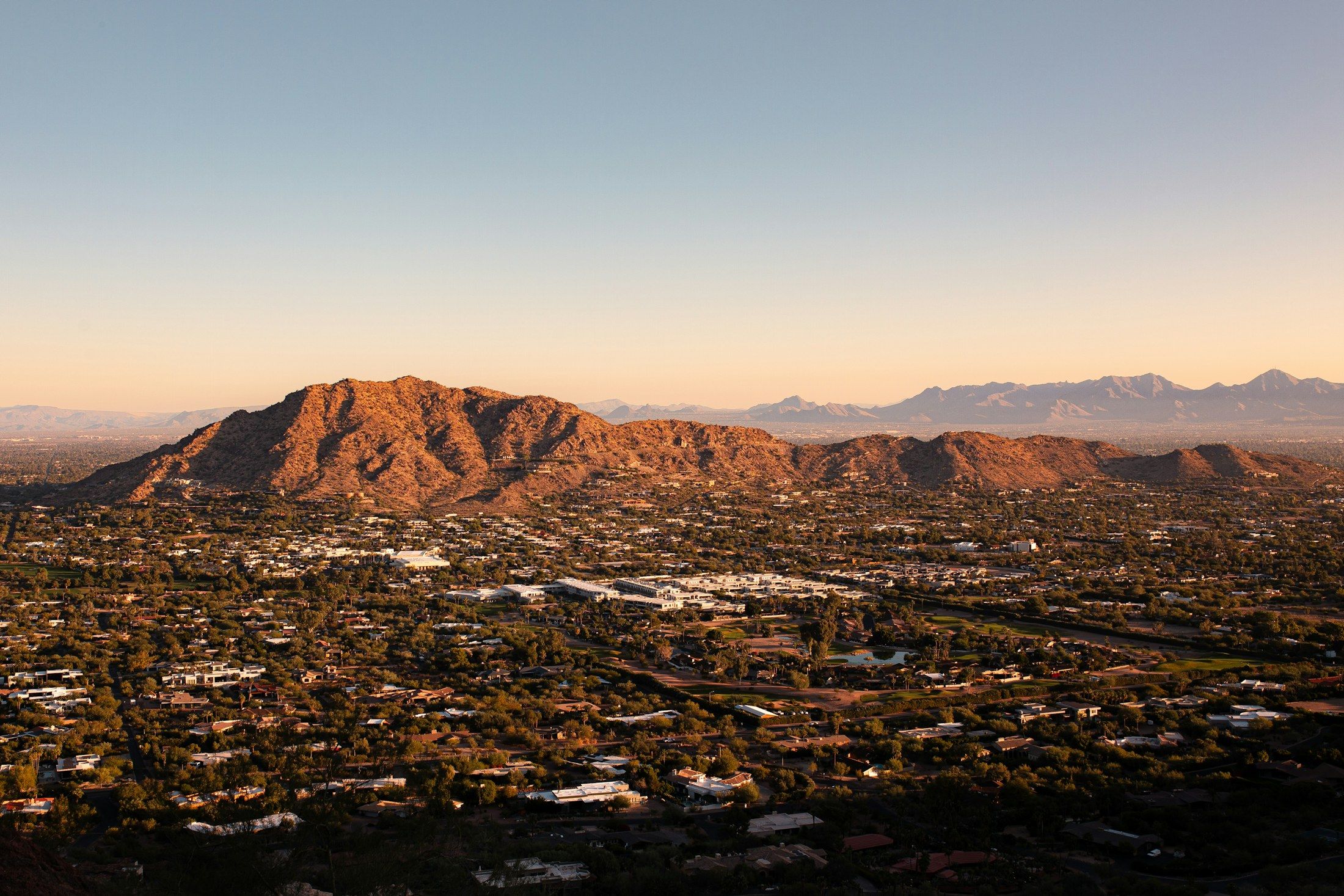
How old Phoenix homes are
The Census Bureau’s American Community Survey (2020–2024) puts the median Phoenix home at 1985. About 41.6% of homes were built before 1980, and the 1970s account for 18.6%, more than any other decade. About 11.6% were built in 2010 or later.
In a house from the 1960s or 1970s, supply lines, valves and drain pipes may have been in the walls for 50 years or more. Newer houses aren’t immune: water heaters, washing machine hoses and AC condensate drains fail at any age. If your home was built before 1978, the EPA notes it’s more likely to have lead-based paint, so ask the provider how they handle cutting out wet drywall.
Hard water and water heaters
Phoenix’s 2025 water quality report lists total hardness of 10 to 17.6 grains per gallon and says “hard water can cause some types of scaling in pipes and water heaters.” A Pacific Northwest National Laboratory report for the Department of Energy recommends draining a storage water heater every year in hard-water areas to clear sediment. ENERGY STAR puts a typical tank’s life at about 13 years and lists leaks, rust in the water and rumbling as warning signs. More on water heater and appliance leaks.
Your valve, the city’s meter
The City of Phoenix says the house shut-off valve is usually at the front of the home, near a hose bib, where a pipe comes out of the ground and goes into the house. Some older houses have it at the rear of the property. Our shut-off valve guide shows what to look for.
Leave the meter alone. It’s city property, closing its valve takes a special tool, and the city warns that you may be held responsible for damage. The meter is also where responsibility splits: Phoenix Water Services repairs leaks on the street side, and anything on your side is the property owner’s to fix.
Galvanized service lines
Your service line is the underground pipe from the meter to the house. In 2024, Phoenix reported an inventory of more than 480,000 service lines and said no existing lead service lines had been found. Galvanized steel is another matter: KJZZ reported in 2022 that the city had identified about 6,000 galvanized steel service lines that the EPA wants replaced.
A leak on your side of the meter is a homeowner repair. The City of Phoenix says soggy ground or sinkholes can point to an underground line leak, and so can water use that climbs with no explanation.
Flood irrigation
SRP delivers flood irrigation to approximately 20,000 properties in the Phoenix area, filling yards a few inches deep, sometimes late at night. City village plans describe flood-irrigated lots in Camelback East and flood-irrigated properties in the South Mountain village. SRP’s advice:
- Berms. Keep them twice the height of the water you receive.
- Amount. Ordering more water than necessary may result in flooding and property damage.
- Neighbors. Knowing who irrigates before and after you helps prevent flooding.
If irrigation water reaches the house, check baseboards and flooring along that wall the same day.
Monsoon storms and record rain
Sky Harbor, home of Phoenix’s official rain gauge, averages 7.22 inches a year (1991–2020). On September 8, 2014, moisture from Hurricane Norbert dropped 3.30 inches there in about seven hours, a calendar-day record. News reports cited by NOAA said the storm flooded some 200 homes. On September 16, 2026, 2 to 4 inches fell from northern Pinal County through northern Maricopa County, most of it within two to three hours, flooding streets, washes and creeks.
The City of Phoenix suggests cleaning out roof drains, scuppers and drywells before storms, and fixing landscaping so water runs away from the house. FEMA notes that most homeowners insurance doesn’t cover flood damage. See monsoon and storm water damage.
Phoenix areas with their own pages
Phoenix is split into 15 urban villages. They’re planning areas, not separate cities, and the neighborhood names people use don’t always match them. These pages go deeper on three parts of the city:
- Arcadia, in the Camelback East village: 1950s ranch homes, flood-irrigated lots and runoff from Camelback Mountain.
- Ahwatukee: HOA master-planned communities, mostly from the 1980s and 1990s, along South Mountain.
- North Phoenix: 1970s homes near the Phoenix Mountains to 2000s subdivisions farther north, including Deer Valley and Paradise Valley Village.
Laveen and South Phoenix are covered by the same call line.
First steps in a Phoenix home
- Close the valve on the leaking fixture or appliance, or the house shut-off. Leave the meter valve to the city.
- Stay out of water that has reached outlets, cords or the electrical panel.
- Photograph the water and everything it touched before you move anything.
- Call to reach an independent restoration provider, and a plumber for the pipe or fixture.
The first-hour guide walks through each step.