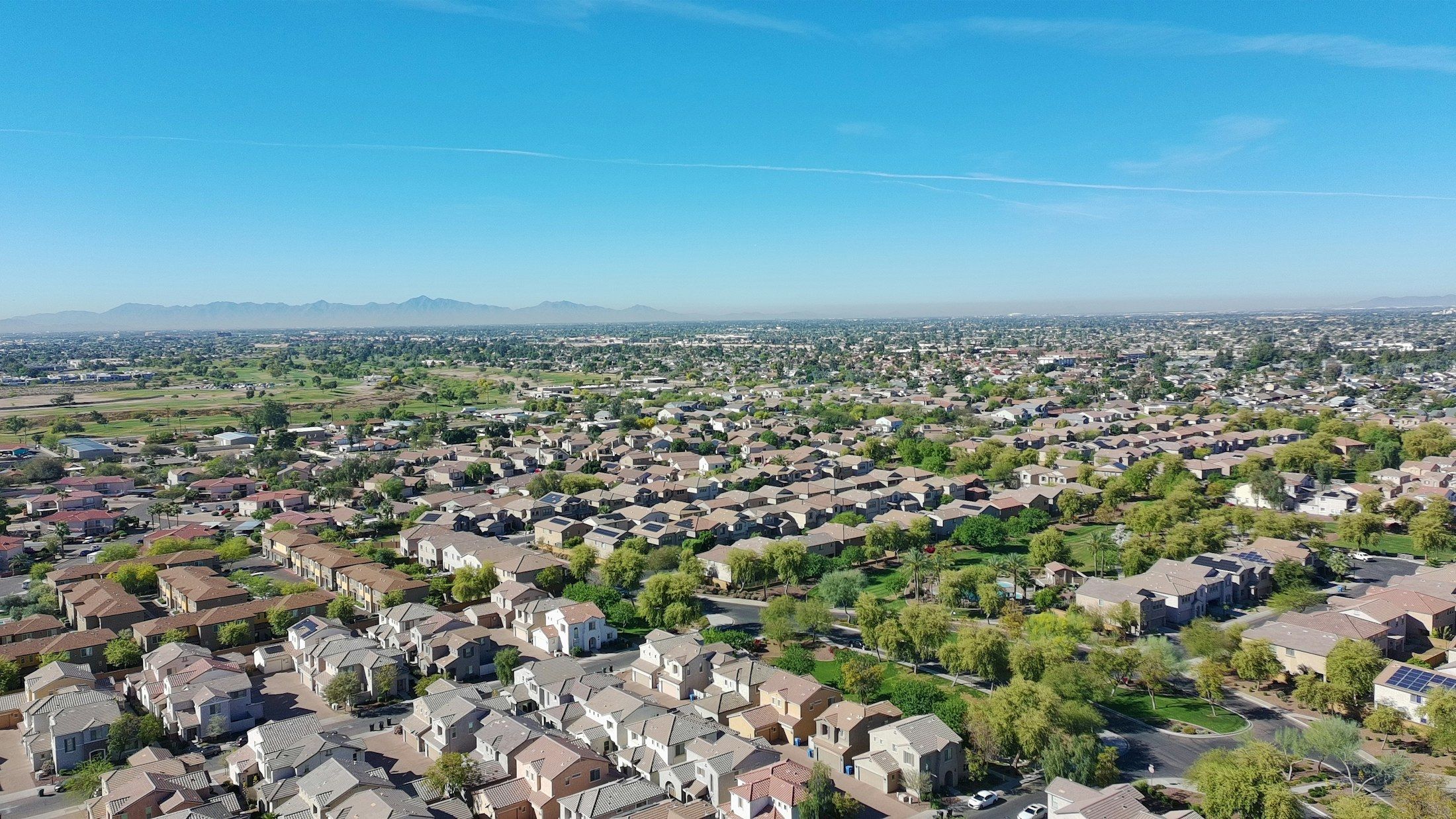
Homes from the 1960s and 1970s
Sun City is an unincorporated community in Maricopa County, and county zoning requires each home to have at least one resident 55 or older. U.S. Census Bureau survey data (American Community Survey, 2020–2024) puts the median Sun City home at 1973. About 89% of homes were built before 1980, most of them in the 1970s and the rest largely in the 1960s. Only about 3% date from 2000 or later.
Many of these homes have been updated over the years. Still, a house this age may have some original plumbing parts, and those are worth a calm, unhurried check before anything goes wrong.
Four things worth checking
- The main shut-off valve. Old or corroded valves can fail or break, according to a water guide from the City of Phoenix and the Arizona Municipal Water Users Association, and they should only be turned by hand. Find yours, try it gently, and if it won’t move, ask a plumber to replace it. The shut-off valve guide shows what to look for.
- The water heater. ENERGY STAR suggests considering a replacement once a tank is more than 10 years old. Leaks at the seams, rust in the water and rumbling from sediment mean it’s near the end. See water heater and appliance leaks.
- Supply lines and hoses. Look under sinks and behind toilets and the washer for drips, stains or bulging hoses. A small drip in a cabinet can go unnoticed for weeks. See burst pipe water damage.
- Old materials. Most Sun City homes were built before 1978. The EPA says homes of that age are more likely to have lead-based paint, and that only lab testing can confirm asbestos. If wet drywall or flooring needs to come out, ask the provider how they handle both.
Attached homes and shared walls
About 27% of Sun City homes are single-family attached homes, and another 11% are in buildings with two or more units, according to the same Census data. In an attached home, water doesn’t stop at the property line. A leak behind a shared wall can reach the home next door, and a leak next door can reach yours.
If that happens, stop the water on your side if you can and let your neighbor know. Check with your association about who is responsible for which parts of the building, and call your insurer, since more than one policy may be involved.
Snowbird season
About 10% of Sun City’s homes, roughly 2,700, are vacant for seasonal or occasional use, per the Census data. A leak in an empty house can run until someone stops by.
Before you leave for the season:
- Shut off the main water valve. The City of Phoenix also suggests turning off the water to the water heater where it enters the tank.
- Ask someone you trust to check the house now and then, and show them where the valve is.
- Leave them your phone number and your insurer’s.
The EPA advises drying water-damaged areas in 24 to 48 hours to prevent mold. If water sat longer than that, see mold remediation.
EPCOR water and sewer
EPCOR supplies Sun City’s water, groundwater from the West Salt River Valley, to nearly 24,000 service connections in Sun City and Youngtown. Its 2025 report puts hardness at 7 to 11 grains per gallon. Hard water leaves scale in pipes and water heaters.
EPCOR also runs the Sun City wastewater system, and it repaired or refurbished more than 2.4 miles of gravity sewer main there in 2019 and 2020. The line from your house to the main is generally the owner’s. If sewage comes up through a drain, see sewage backup cleanup.
County contacts for Sun City
- Building permits: Maricopa County Planning & Development.
- Floodplains: the Flood Control District of Maricopa County.
- Water and sewer: EPCOR.
- Fire and medical emergencies: the Sun City Fire & Medical Department.
Step by step if water gets in
- Close the valve at the fixture, or the main shut-off. Turn it by hand.
- If water is near outlets or cords, stay out of it.
- Take photos before you move anything, then call your insurer.
- If a neighbor’s home may be affected, let them and your association know.
- Call to reach an independent restoration provider that serves Sun City, and a plumber for the repair.