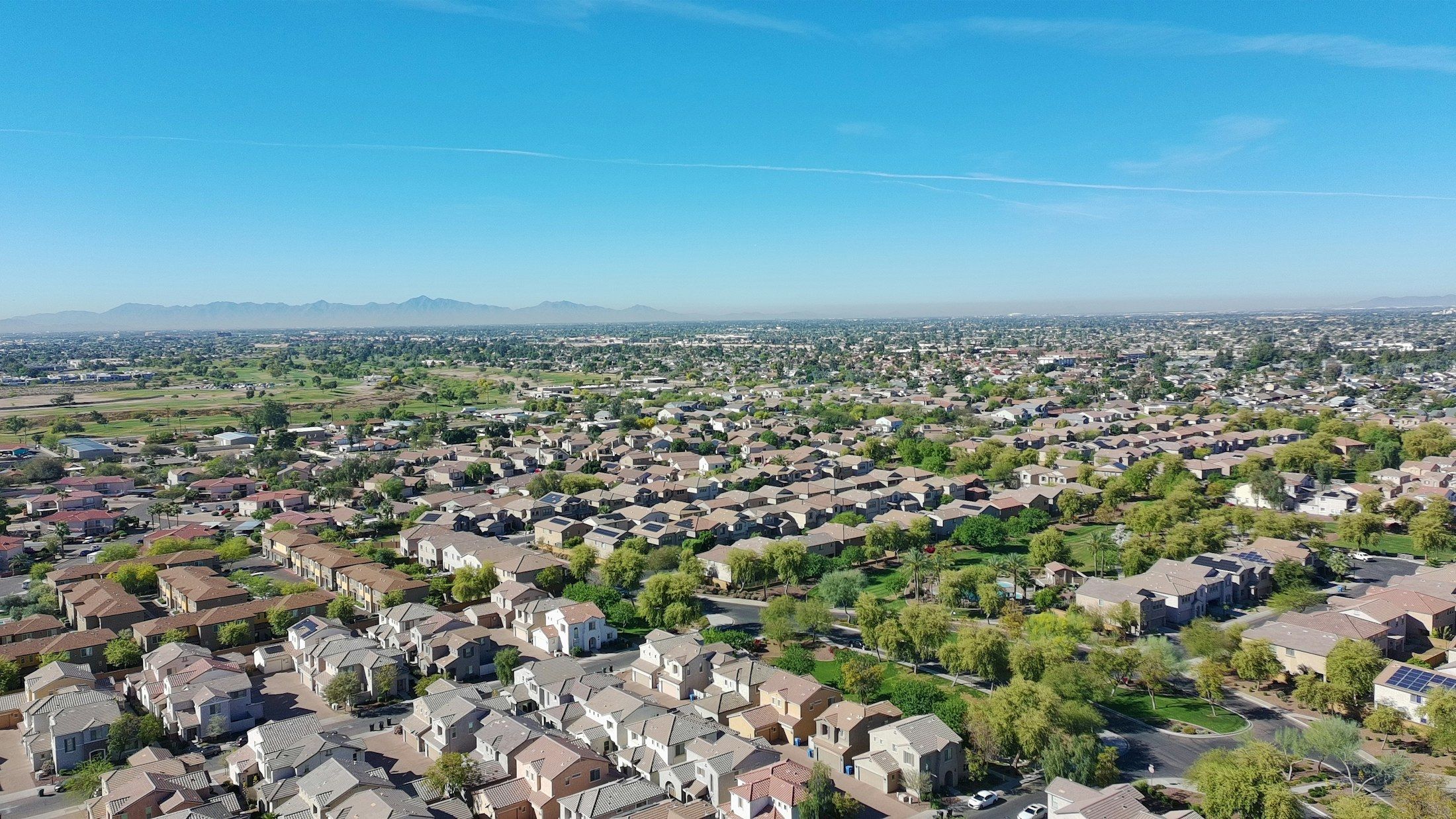
The August 2026 storm
On the night of August 9–10, 2026, a thunderstorm cluster tracked west along I-10 through Tolleson, Litchfield Park, Avondale, Goodyear and Buckeye. Radar sampled winds of 70 to 80 mph or more, and more than 50,000 customers lost power. The National Weather Service reported destroyed carports, blown-in garage doors and roof parts blown off. It said the most severe damage was in Avondale, where the wind rolled metal construction pipes weighing at least 1,000 pounds each into a neighboring community.
The City of Avondale called the damage citywide and named Rio Crossing, Sage Creek, Las Palmeras and Corte Sierra as the most affected neighborhoods. Weather Service photos from Sage Creek, near Dysart and Indian School roads, show dozens of shingles gone from one roof and a garage door blown in.
Damage that turns into water damage later
A roof with missing or lifted shingles can let the next monsoon storm into the attic, where water soaks insulation before a stain ever shows on the ceiling. EPA guidance on water-damaged materials says wet insulation should be discarded and replaced. A blown-in garage door leaves the garage open to wind-driven rain, and in many Valley homes the water heater sits in the garage.
If nobody has checked your roof since August, do it before the next rain. See the roof leak guide and monsoon and storm water damage. The EPA advises drying wet materials within 24 to 48 hours to prevent mold. If water sat longer, ask about mold remediation when you call.
Old Town’s older homes
Most of Avondale is fairly new. U.S. Census Bureau survey data (American Community Survey, 2020–2024) puts the median home at 2002, and only 12% of homes predate 1980. Historic Avondale, around Old Town near Dysart Road and Western Avenue, is different. In the Census tract around the Sam Garcia Library, the median home dates to about 1976, about 60% of homes were built before 1980 and about 17% before 1960. About 11% are manufactured homes.
Fewer than a third of the homes in that tract are owner-occupied. If you rent, report a leak to your landlord or property manager right away; the city gave renters the same advice after the August storm.
The EPA notes that homes built before 1978 are more likely to have lead-based paint, and that cutting and demolition can create lead dust. Ask the provider how they handle that before wet drywall comes out.
22 grains per gallon
Avondale’s own water is very hard. The city’s 2023 water quality report, the latest with a hardness figure, puts city-produced water at an average of 378 ppm, or 22.1 grains per gallon. Water delivered from the City of Phoenix ran 8.6 to 16.8 grains. The report calls anything above 10.5 grains “very hard.” In 2025, about 84% of the water the city delivered was its own, drawn from city wells.
What that means at home:
- Water heaters. The City of Scottsdale’s water heater guide calls overheating from sediment buildup a main cause of failure, and recommends draining at least 5 gallons every six months where mineral content is high. It also warns that plastic drain valves are common and can break, so go gently.
- Softeners. A softener cuts scale, but the same guide says softeners can wear out a tank’s anode rod faster, so have it checked more often.
- Pipes and fixtures. The City of Phoenix notes that hard water can cause scaling in pipes and on faucets and showerheads.
ENERGY STAR lists rumbling from sediment, rust in the water and leaks at joints or seams as signs a tank is failing. See water heater and appliance leaks.
The city’s Home Repair Program
Avondale’s Home Repair Program helps income-eligible owners who have owned and lived in their home for at least a year, with work such as roof repairs, water heater replacements and plumbing leaks. The city says it is not an emergency response program, and there’s a waitlist.
Before the next storm
The city keeps self-service sand and bags at its Municipal Operations Service Center, open around the clock, and at all Avondale fire stations. Place bags before water arrives, and focus on doorways, garage entrances and other low-lying entry points. After flooding, the city reminds residents to protect their health from contaminated water and mold.
First steps after water gets in
- Stop the source: close the fixture valve or the main shut-off.
- Stay out of water near outlets or cords. Ready.gov warns that downed power lines can electrically charge water.
- Take photos before you move anything, then call your insurer or landlord.
- Call to reach an independent restoration provider that serves Avondale. See emergency water extraction and the first-hour guide.