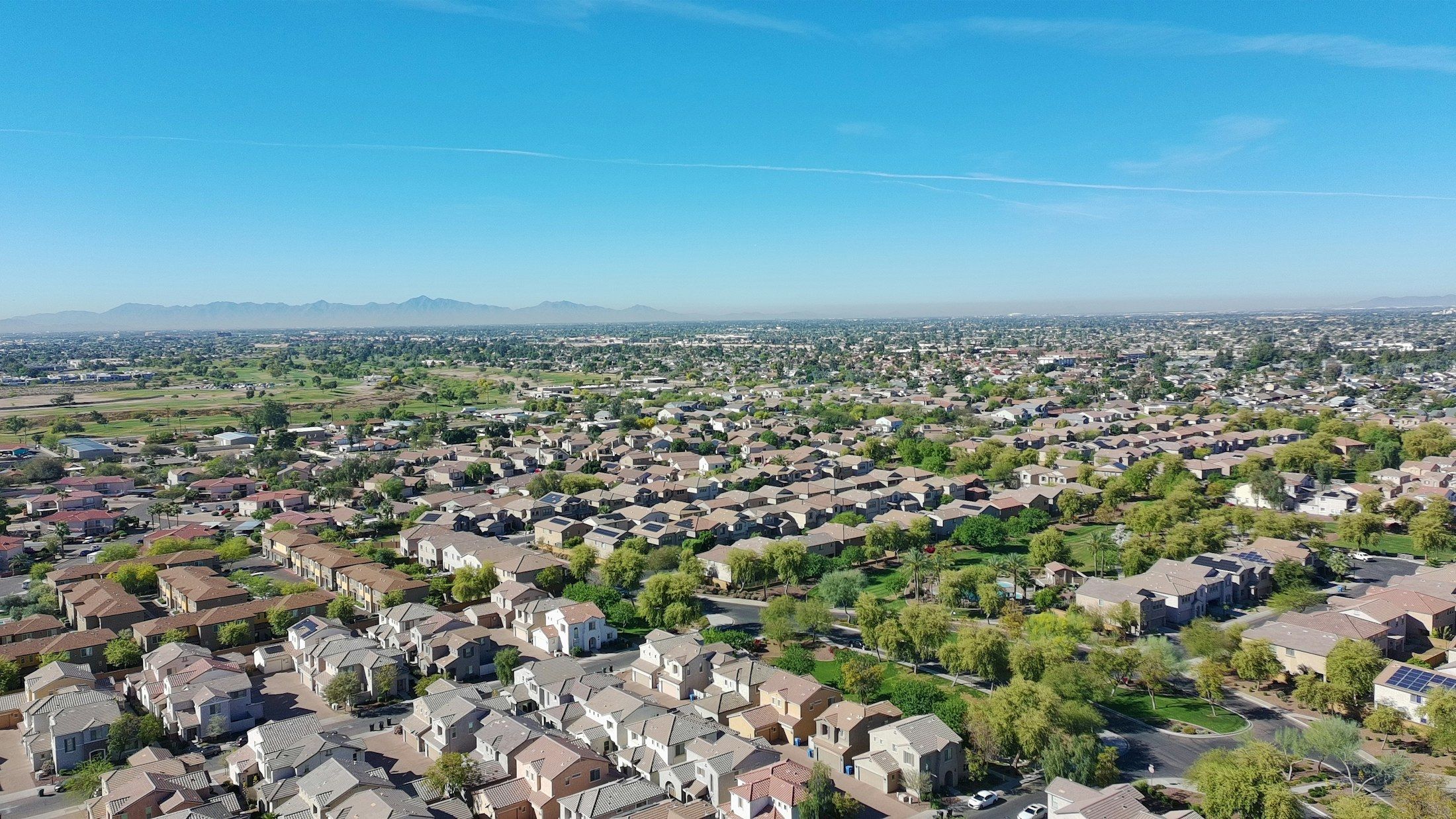
Glendale’s 1970s growth
Glendale grew from about 36,000 people in 1970 to about 97,000 in 1980, and its housing still reflects that decade. U.S. Census Bureau survey data (American Community Survey, 2020–2024) puts the median Glendale home at 1986, older than in Peoria, Surprise, Goodyear or Avondale. More homes went up in the 1970s than in any other decade. About 35% of homes predate 1980, and only about 20% were built in 2000 or later.
In a house that is 40 or 50 years old, supply lines, washing machine hoses and fixture shut-off valves wear out, and some may be original. When one fails inside a wall or cabinet, water can spread under flooring before you notice. See burst pipe water damage.
The EPA notes that homes built before 1978 are more likely to have lead-based paint, and that cutting and demolition can create lead dust. Ask the provider how they handle that before wet drywall comes out.
South Glendale and ZIP code 85301
The oldest part of the city is in the south, around the original town site near downtown. In ZIP code 85301, the median home dates to 1977 and more than half were built before 1980. In 85310, in the far north, the median is 1995. ZIP codes cross into Phoenix and Peoria in places, so treat these as a rough guide.
Manufactured homes are concentrated here too: about 13% of homes in 85301, compared with about 6% citywide. In a manufactured home, a slow drip from a line under the floor can soak the subfloor long before a soft spot shows up inside. Mention the type of home when you call.
Wind, hail and roofs
Several damaging West Valley storms have run through Glendale:
- October 18, 2015. The National Weather Service described damaging winds and hail across Glendale, with a north-south swath of wind damage through parts of Phoenix and Glendale.
- September 12, 2023. A supercell tracked east through Goodyear, Glendale and Phoenix, with hail up to 1.5 inches and damage mainly to roofs, carports and garage doors.
- August 9, 2026. A storm that formed near North Mountain Park moved into the Glendale area with radar-sampled winds of 70 to 80 mph or more. Weather Service photos show power poles blown over along 43rd Avenue and an uprooted tree that damaged a carport and cars at 47th and Northern avenues.
A roof with cracked tiles or lifted shingles may not leak until the next storm. See monsoon and storm water damage and the roof leak guide.
The Bethany Home Road drainage project
The City of Glendale is rebuilding storm drainage in south-central Glendale. It says the Bethany Home Road project “will help reduce the current flooding issues in the area.” Work started in February 2026 and is planned in five phases over about three years.
Until then, homes nearby should plan for storm water. The city runs two sandbag stations open 24 hours: Bonsall Park South at 59th Avenue and Bethany Home Road, and the Glendale Fire Support Services site. Bring your own shovel. The Flood Control District advises filling bags half to two-thirds full and stacking them at front doors and other low entrances.
Hard water and the water heater
The latest hardness figure the City of Glendale has published is from 2021: 12 to 16 grains per gallon, averaging about 14. The 2024 report gives no number but says hard water “can lead to scaling in pipes, water heaters and plumbing fixtures.” In 2024, most of the city’s water came from the Salt and Verde rivers through SRP and from the Colorado River through CAP.
ENERGY STAR puts the typical life of a storage water heater at about 13 years. Its warning signs include leaks at joints or seams, rust in the water and rumbling from sediment. See water heater and appliance leaks.
Reading the meter
Glendale’s water department recommends reading your water meter to confirm a leak. Turn off everything that uses water, note the reading, wait, and check again. If it moved, something is leaking.
If the meter moves and no toilet is running or fixture dripping, the leak may be in a line under the slab or in the yard. See slab leak water damage.
What to do first
- Close the valve at the fixture, or the main shut-off for the house.
- Stay out of standing water near outlets and cords.
- Take photos before you move anything.
- Call to reach an independent restoration provider that serves Glendale, and a plumber or roofer for the repair.
The first-hour guide covers each step.