A planned town in the hills
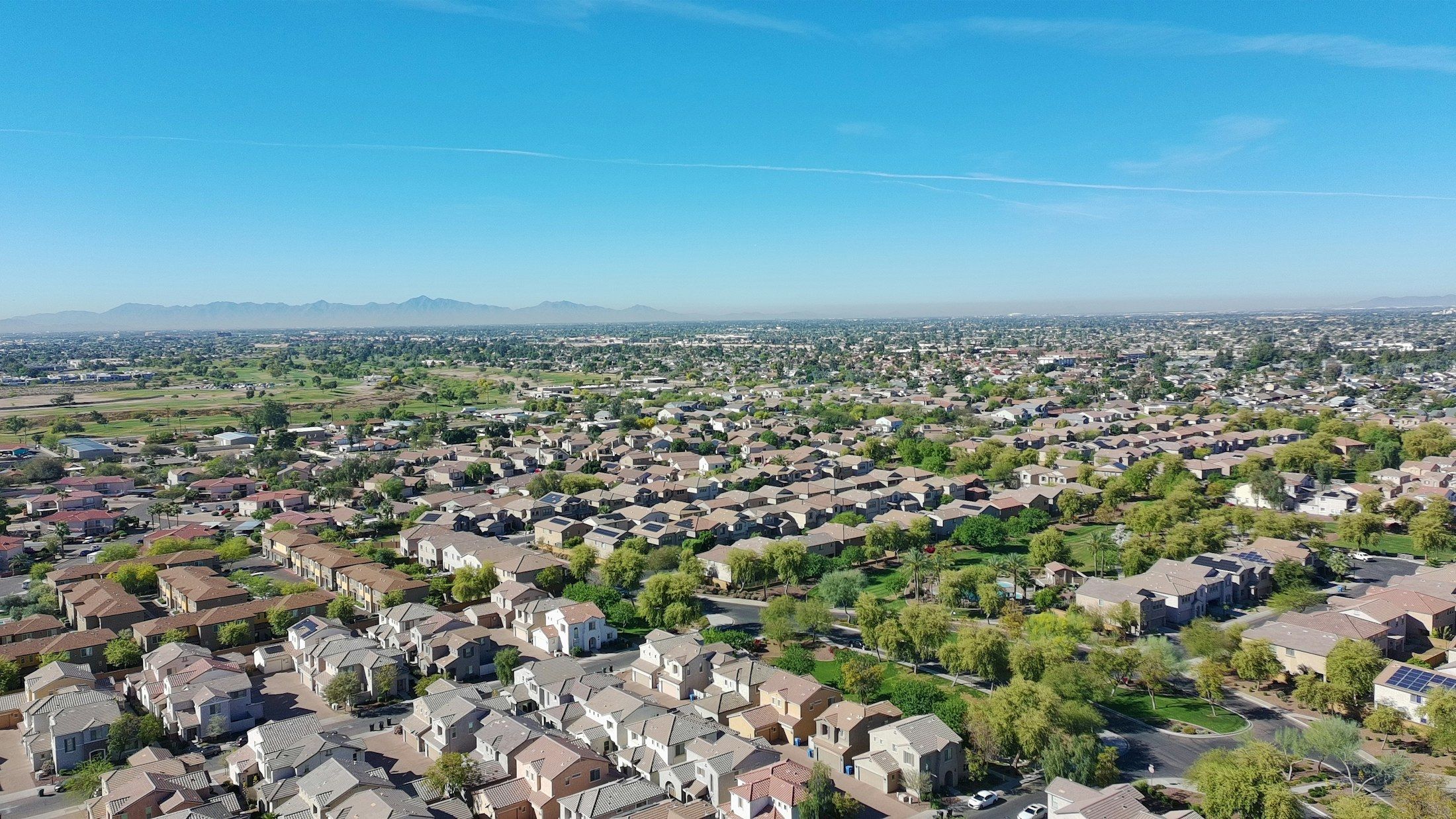
Fountain Hills started as a planned community. In 1970, McCulloch Properties set out to build a model city on former ranch land. The fountain was christened that December, and residents were living there by early 1972. The town says it sits 400 to 500 feet higher than other metro Phoenix communities, with elevations from about 1,510 feet in the southeast to 3,170 feet in the northwestern hills.
U.S. Census Bureau survey data (American Community Survey, 2020–2024) puts the median home at 1994. The 1990s were the busiest building decade, and about 12% of homes predate 1980. About 13% are townhomes or other attached houses, and the town notes it has a higher share of them than Maricopa County overall. In an attached home, a leak can reach the unit next door.
“Floods do and will happen”
That’s the town’s own wording. Its StormReady page says: “Floods do and will happen in Fountain Hills. Our topography brings water down from the mountains and hills.”
A 2002 flood response plan from the Flood Control District of Maricopa County explains why. Most of the local ground is “relatively impermeable,” which means large runoff volumes and washes that rise quickly. For some wash systems, floodwater can reach critical levels before responders can act. The local paper has also noted that paved streets “spur runoff.”
The town’s washes are regulatory floodways under FEMA, controlled with dams and culverts, and most are owned by the town. Recent storms show how much rain the hills catch:
- September 26, 2025: a gauge at the Adero Canyon Trailhead recorded 3.46 inches, and washes were barricaded and watched by sheriff’s deputies.
- September 16, 2026: Hesperus Wash recorded 2.32 inches and Cloudburst Wash 2.13 inches, and Ashbrook Wash was flowing along Saguaro Boulevard.
The flood records we found describe mostly flooded road crossings, water running down streets and relatively minor flooding of buildings, not widespread home damage. Still, water running down a street can find a low garage or doorway. The town warns of “fast-moving water cascading down washes and streets” during monsoon season, so stay out of washes when they run. See monsoon and storm water damage.
When the house sits empty
Fountain Hills has a lot of part-time homes. The same Census survey data counts about 1,565 homes, roughly 12% of the total, as seasonal, recreational or occasional-use.
A leak in an empty house keeps going until someone finds it. A split supply line or a failed water heater can run for days or weeks, soaking flooring, drywall and cabinets. The EPA advises drying water-damaged materials within 24 to 48 hours to prevent mold, and a joint EPA and CDC guide says that if a home couldn’t be dried in that window, you should assume mold has grown.
Before a long trip, the City of Phoenix suggests shutting off the water to the house and to the water heater. That tip isn’t specific to Phoenix; it works for any home that will sit empty. If you come back to a wet floor or a musty smell, see mold remediation and the guide to signs of hidden mold.
Very hard water from EPCOR
EPCOR’s Chaparral City system serves the town with Colorado River water from the Central Arizona Project, mixed with Lake Pleasant water, plus groundwater pumped from beneath the town. EPCOR’s 2025 water quality report puts hardness at about 16 grains per gallon. It classifies anything above 10.5 as “Very Hard,” doesn’t treat for hardness, and notes that hardness can shift with the seasonal mix of sources.
The City of Phoenix notes that hard water can cause scaling in pipes and water heaters. The Smart Home Water Guide, from the City of Phoenix and the Arizona Municipal Water Users Association, suggests looking for corrosion leaks such as a rusty water heater bottom. In a part-time home, have whoever checks the house look at the tank too. See water heater and appliance leaks.
Your side of the sewer line
Sewer service comes from the Fountain Hills Sanitary District, a special district separate from the town. The district maintains the main line in the street. The line on your property is yours, “including damage due to root intrusion.”
If you walk into a wet house
- Close the valve on the leaking fixture, or the main shut-off.
- Stay out of water near outlets, cords or the electrical panel.
- Take photos before you move anything.
- Call to reach an independent restoration provider that serves Fountain Hills, plus a plumber if a line or tank needs repair.